BT’s AI receptionist: what it costs, what it can do, and when your business needs a tailored voice AI solution
BT has launched its new AI Receptionist for UK businesses. We look at what it costs, what it can actually do, where its limits may appear, and when a tailored voice AI solution could make more sense.

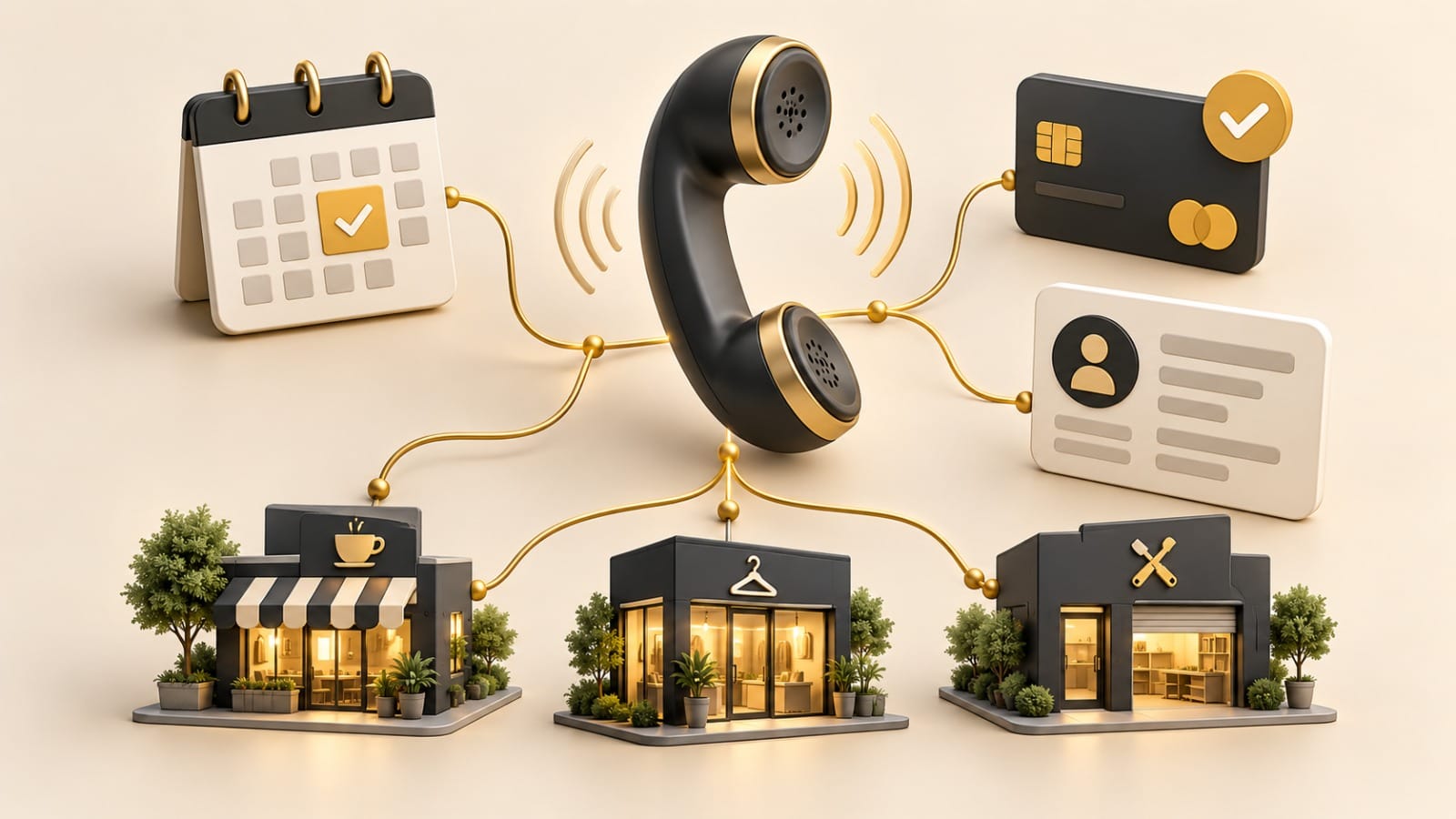
BT Business has launched an AI receptionist aimed at UK small and medium-sized businesses. It promises to answer calls when staff are busy, handle routine enquiries and help customers book appointments.
For a business that regularly loses enquiries to voicemail, that's worth investigating. A restaurant can't spare someone to answer every opening-hours question during dinner service. An electrician working on-site may struggle to take a new enquiry. Reception staff often spend time answering questions already covered on the business’s website.
But businesses buying voice AI need to look beyond the demonstration call. What happens after the caller explains what they want? Can the system book the correct service at the correct branch, collect a deposit and update the software your team already uses? Who changes the workflow when the business grows?
Those questions help distinguish a packaged AI receptionist from a voice AI solution designed around your operation. Providers such as GeekyBee take the latter approach, connecting conversations to business processes and existing systems.
BT and RingCentral already offer more than basic call answering, including integrations and multi-site support. The question is how far those capabilities extend when they meet the real-world processes of your business.
What BT has launched
BT announced its AI from BT portfolio on 1 October 2026, alongside a free AI Adoption Hub. AI Receptionist is one of its first products, positioned as a practical entry point for smaller businesses.
There are actually two versions. AI Receptionist (AIR) is for BT Cloud Work customers, while AI Receptionist Everywhere (AIRE) is standalone and does not require Cloud Work. Both are administered through the Cloud Work portal.
That distinction matters if your phone service comes from another provider. Using the same portal does not necessarily mean replacing your existing phone system.
BT’s offering is built on RingCentral technology. RingCentral launched its own AI Receptionist in the UK in September 2025, so the underlying product has a longer track record than BT’s recent announcement.
That existing RingCentral experience can help inform a buying decision, although BT’s pricing, features and support arrangements should be considered separately.
What happens after the caller asks for an appointment?
BT’s product literature describes answering routine questions, routing callers, checking availability, booking appointments and sending email confirmations. It can also use information from a business’s website and update its knowledge when that content changes.
These functions can remove repetitive work. A caller asking about parking could receive an immediate answer, while someone looking for an appointment could move directly to a booking.
Complexity starts when business rules become involved.
- A clinic appointment may depend on whether the caller is a new patient, which practitioner provides the service and which location has the right facilities.
- A garage may need a particular technician and enough workshop capacity.
- A restaurant reservation can involve more than simply finding an empty slot.
Those are the scenarios worth testing in a demonstration. Otherwise, “appointment booking” may mean something much simpler than the process your business actually needs automated.
What does BT’s AI Receptionist cost?
BT doesn't publish a monthly subscription price or numerical overage rate, so you’ll need a quote based on your expected usage.
It does publish the following package details:
|
Item |
Published details |
|
Minute packages |
100 to 14,000 minutes per month, in
100-minute increments |
|
Billing basis |
Inbound call minutes |
|
Overage |
Charged at a higher rate, but no
numerical price is stated |
|
Optional training |
£150 for a one-hour session |
|
Abandoned training booking |
£25 charge |
|
Contract |
Monthly rolling |
|
Launch promotion |
50% off the 100- and 300-minute
packages for six months; offer runs from 2 October to 20 November |
Training is recommended rather than mandatory, although BT’s published charges don't make the VAT position clear.
When requesting a quote, ask for both the introductory price and the normal price after six months. Also check for any additional charges for numbers, forwarding, messaging or integrations.
Usage limits are particularly important. BT says administrators receive alerts at 80% and 100% usage. Overage is off by default, but you can enable it with a spending cap. Without additional minutes or overage enabled, the AI service switches off when the allowance is exhausted.
If you’re buying an AI receptionist to avoid missed enquiries, make sure you know exactly where the next call goes when that happens.
How minute allowances affect the economics
According to BT’s Cloud Work schedule, AIR usage starts when the AI connects and ends when the call finishes or transfers, with usage rounded up in 30-second increments. Unused minutes do not roll over.
- That means 100 minutes might cover around 50 two-minute calls. Ten three-minute calls a day across 22 working days would use around 660 minutes a month.
It's easy to see how a small allowance could disappear quickly, particularly if spam, wrong numbers or other unwanted calls count towards usage.
When the allowance is exhausted, BT’s Cloud Work terms describe calls being forwarded to a configured backup extension. A spending cap can control unexpected costs, but businesses should still check what counts towards their minutes and, importantly, what happens to the next caller.
Are these products just voice, a knowledge base and a diary connection?
That description captures part of the appeal of an entry-level AI receptionist, but both BT and RingCentral offer more than that.
RingCentral’s UK product supports custom intake questions and updates to systems such as Salesforce and HubSpot. It also describes multi-location capabilities, including location-specific opening hours, teams and transfer rules.
BT also advertises multi-site support, so this isn't simply a single-location receptionist.
The important distinction is what “multi-site” means in practice. Routing a caller to the right branch is one thing; finding the correct service, practitioner, location and available equipment before making a booking is considerably more complex.
That's why businesses should test the actual workflow they need rather than relying on the feature list alone.
Stripe payments: ask for the complete workflow
I found no confirmed Stripe payment workflow in BT’s published AI Receptionist material. That doesn't mean it cannot handle payments, but it's something businesses should ask about specifically.
There's also an important difference between sending a payment link and integrating payment into the complete booking process.
For example, if an appointment requires a £30 deposit, the system needs to associate that payment with the correct booking, send the customer a way to pay and know whether the payment has been completed. It also needs to know what to do if payment fails or the customer changes their mind.
Stripe Payment Links can request payment, while Stripe’s post-payment tools allow other actions to happen once payment is complete.
So ask for a real demonstration: make the booking, request the deposit, complete the payment and show what appears in the booking system. Then try it again with a failed or abandoned payment.
Any supplier offering payment automation should be able to demonstrate both.
Why tailored voice AI can justify the extra work
A tailored voice AI solution starts with the process your staff actually follow.
Consider a clinic with several locations. The AI could identify an existing patient, understand the appointment they need and search for suitable practitioners across different branches. Once a slot is accepted, it could request a deposit and record the result in the practice system.
- The real benefit comes after the call. If staff still need to copy information, check availability, chase payment, or correct the booking, much of the promised automation disappears.
A tailored system can also change with the business. Add another branch, introduce a new service or change the deposit rules, and the workflow can be adapted accordingly.
That's where a designed voice AI solution can justify the additional investment: not simply by answering the call, but by completing more of the work that follows it.
What GeekyBee actually offers
At GeekyBee, we start with the business process and build the voice AI around it. That can include connecting to existing systems through APIs and webhooks, automating workflows and monitoring those connections once the system is live. Read more about GeekyBee’s automation services.
Our AI automation services include caller recognition, appointment booking and cancellation, payment handling and human handover where required.
ClinikoVAI is a good example. Developed for practices using Cliniko, it can identify patients, work with the live appointment diary, make and cancel bookings, handle payments and arrange callbacks.
We can also connect workflows with services including Stripe, GoCardless and PayPal.
The important difference is that these connections are designed around the individual business. Not every customer needs the same integrations or workflow, so the system is scoped around what needs to happen before, during and after the call.
What a solution designed around your business should demonstrate
A demonstration should follow a real customer journey, not simply show individual features working.
- For a clinic, ask to see an existing patient identified, an appointment changed, and the correct diary updated.
- For a garage, test a booking requiring a particular technician.
- For hospitality, try a booking that cannot be accommodated under the normal rules.
Then deliberately make something go wrong. Make a payment fail, disconnect the booking system or give the AI an ambiguous request. Does it explain the problem correctly and create a useful follow-up for a staff member?
Also ask what happens after launch. Who updates the integration when your booking platform changes? Who reviews calls and improves the system when something does not work as expected?
These tests tell you considerably more about a voice AI solution than a feature list.
When a packaged receptionist may be enough
Not every business needs a tailored voice AI solution.
A tradesperson may simply need callback details collected while working. A retailer might want opening-hours questions answered, while an estate agent may need viewing enquiries captured when nobody is available.
For straightforward requirements like these, a packaged AI receptionist can make perfect sense if the information is accurate, the handover works, and the usage costs are reasonable.
A tailored solution becomes more valuable when the caller needs the AI to take actions across existing systems, follow specific business rules or complete processes that would otherwise be left to staff.
The choice should follow the workload. There's little point paying for custom development to answer a handful of simple questions. But a cheaper service can also become expensive if every call leaves several manual tasks behind.
What do we know so far?
BT’s service has only just launched, so independent evidence from businesses using it is still limited. Early coverage from TechRadar and Telecoms Tech News largely reports what the service promises rather than long-term results.
BT does provide a case study involving a London law firm. The firm reportedly reduced its reliance on an external answering service costing more than £1,000 a month, while retaining its receptionist for work requiring human judgement. BT doesn't disclose the AI bill or the resulting net saving.
Experiences from existing RingCentral users provide some useful clues. In one user discussion, a business introduced a keypad step to prevent spam calls consuming paid AI minutes. Other users have discussed how calls are handled when the AI or staff are unavailable.
For now, the sensible approach is to test with your own calls, calculate the cost at realistic usage and look closely at what work remains after the AI has finished the conversation.
The £3.7 billion missed-call figure needs context
BT estimates that missed calls cost UK small businesses around £3.7 billion a year.
It's a striking figure, but it's an estimate based on survey responses about lost revenue, which BT then extrapolated across the wider business population. BT itself describes the figure as indicative rather than an audited measure of losses. Read BT’s methodology.
More importantly, £3.7 billion does not tell you what an AI receptionist could save your business.
Your own figures are much more useful. How many calls do you actually miss? How many are genuine enquiries? How many would have become paying customers? Establish that baseline first, then you have something meaningful against which to measure the cost and effectiveness of an AI receptionist.
Compare the total cost, including the work left behind
Other AI receptionists provide some useful pricing context. IONOS currently lists UK plans from £39 excluding VAT for 30 calls, £69 for 100 calls and £99 for unlimited calls, although its allowances cannot be directly compared with BT’s minute-based packages.
For a tailored solution, the comparison should include the initial build, monthly running costs, call usage, support and the cost of future changes. Messaging and payment-processing charges should also be included where relevant.
But don't forget the cost of the work left behind.
If every AI-handled call still creates five minutes of administration and you receive 200 calls a month, that is nearly 17 hours of staff time. Reduce that follow-up work and the economics can look very different.
The cheapest AI receptionist is not necessarily the one with the lowest monthly fee. It's the one that delivers the best overall saving for the business.
Choose the supplier that can prove your workflow
BT’s AI Receptionist deserves consideration, particularly for businesses wanting to handle routine enquiries and missed calls. Where booking rules, payments or integrations become more complex, it's worth comparing a packaged service with a tailored voice AI solution.
The best way to do that is not by comparing feature lists. Ask each supplier to demonstrate your actual customer journey. Change a booking. Try an unavailable location. Make a payment fail. Then look at what appears in your systems and what work remains for your staff.
Compare the total cost as well: setup, monthly charges, usage, support, and future changes.
Ultimately, the best AI receptionist is not necessarily the one that answers the call most convincingly. It's the one that completes the most useful work for your business after the conversation begins.
If your requirements go beyond standard call handling, book a free discovery call with GeekyBee, and we can map out the process, identify what can be automated and establish where people should remain involved.
Research checked and links verified on 5 October 2026.